The urgency of the rare earth issue demands great attention from Brazil. In times of easy discourse regarding privatization, usually presented as an infallible remedy for all national ills, particularly in the economic area, to the hasty (perhaps the mistaken) it may seem that defending the nationalization of a sector is a total contradiction, even more so when defending nationalization coupled with the creation of a new state-owned company. That is precisely what we propose in this article: the creation of TERRABRAS – Terras Raras do Brasil S/A. And we will explain our reasons.
A little history:
Motivated by the “The oil is ours” campaign, President Getúlio Vargas signed Law No. 2,004, which created Petrobras. With total national control and ownership, with majority participation by the Union, Petrobras holds the monopoly on the exploration of all stages of the oil industry, except for distribution.
It is quite true that the dynamics of the sector and, fundamentally, the political and ideological visions distinct from those that motivated the creation of Petrobras have changed over the years, with consequences for the rules governing oil exploration in Brazil. But we don’t need to elaborate on the importance and relevant role of the Union for the national oil industry, and here we highlight the year 2006 when we achieved “sustainable self-sufficiency in oil and gas production, with the entry into operation of the P-34 and P-50 platforms, whose projects were developed by Cenpes (Leopoldo Américo Miguez de Mello Research, Development and Innovation Center).”
But it is the discovery of the pre-salt layer in that same year, 2006, that would enormously change the company in the national and international scenarios.
It’s always worth remembering that in less than 15 years after that discovery, in 2022, no less than 92% of Brazil’s total oil production originated from deep and ultra-deep waters, which clearly reflects a choice for endogenous technological development.
More than that, we would say it’s a quest for technological autonomy. Today, Petrobras discovers more reserves than it produces and has guaranteed oil until 2038. The latest news reports that “maintaining the current pace of exploration, Petrobras will have sufficient reserves for more than a decade without new additional discoveries” (Revista Fórum; Nova Lado B – Edition No. 1,710 – 03.02.2026).
But we know that in this scenario, there is the environmental debate and, now in January 2026, 161 civil society organizations, linked to the Climate Observatory, delivered a document to the Lula government with “recommendations for reducing dependence on fossil fuels.” The objective is to demand that the government establish a timetable in order to “zero out oil auctions in Brazil.”
Given the statements mentioned so far, it is worth asking if there are parallels between the mineral resources ‘oil’ and ‘rare earths’? Yes, many. It is important to emphasize that, in addition to exploration, the central concern should be based on “value aggregation,” that is, what we do with the extracted product. This is the crux of the matter, since a large part of our dependence originates and resides there. However, before addressing rare earths, it is necessary to consider a background called “mineral exploration.”
Let’s see what the ANM – National Mining Agency website itself states: Mining is an economic and industrial activity that includes the research, exploration (mining) and processing of minerals present in the soil and subsoil. In Brazil, mineral resources belong to the Union, as established in article 176 of the Federal Constitution.
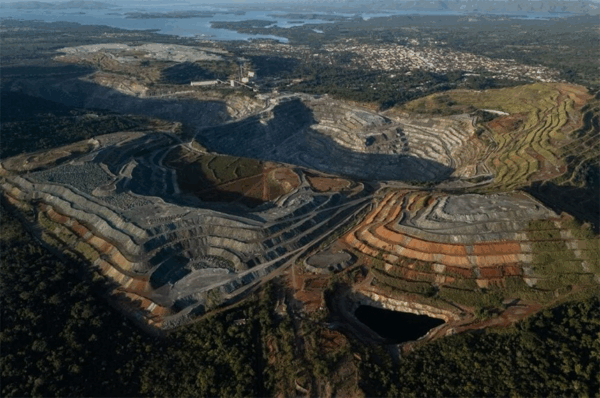
Okay, now we can consider our central theme. What are rare earth elements? Why have they gained greater relevance in the 21st century? Let’s try to answer these and other questions. Rare earth elements are understood to be “a set of 17 metallic chemical elements that are present in minerals and that, despite their name, occur in abundance in nature.”
The graph (presented below) helps us visualize the size and in which countries the main world reserves of rare earth elements are located. This is important information, as this scenario represents another window of opportunity for Brazil, which should not be missed, because a scenario of technological and economic anomie would mean that such minerals – present in our subsoil – could turn to dust as wealth if not properly explored and processed here.
To better explain our understanding of the matter, it’s not about contrasting the current role assigned to the ANM (National Mining Agency) or the SGB (Brazilian Mining Service – Ministry of Mines and Energy), but rather, given the new global scenario emerging with the technological use of rare earth elements, establishing a national project in Brazil where mineral resources cease to be commodities to be extracted and sent abroad. Instead, in the medium and long term, Brazil will be actively involved in the production of products, parts, and components, for example, for flat-screen televisions, smartphone screens, LED lamps, X-ray and tomography equipment, and even components for guided missiles, in addition to applications in clean energy.
The industrial application of rare earth metals is broad, as they are incorporated into superconductors, miniaturized magnets, catalysts used in the refining of various products, and components for wind turbines and magnets for electric motors and hybrid cars. However, for Brazil to participate in the competition in these markets, we still have a long way to go. To achieve this, we must confront our technological and investment limitations. Much larger volumes will be needed than those produced so far.
Our rare earth reserves position us well on the world stage, but that is not enough. It is the foundation upon which we must prepare Brazil’s competitive insertion. Note that alongside the largest reserves (graph below), it is relevant to examine who the largest producers of rare earths in the world are (table below). The graph highlights China, Vietnam, Brazil, and Russia, but it is our understanding that the table, by indicating the top ten countries – in terms of rare earth production in 2025 – signals the true battle for these critical minerals, and in this case, Brazil is outside the list of countries with significant global production, which are: China, USA, Myanmar, Australia, Nigeria, and Thailand.

A first, somewhat obvious observation is directly related to the geopolitical issue of rare earth elements, since once again the main dispute pits China against the US. A fact is that “the Chinese government’s monopoly on the production and export of these resources, given their geographical abundance, and greater flexibility in environmental legislation, places Beijing in a position of strategic privilege.”

Let’s consider Brazil. Let’s start with our Gordian knot, because it’s a fact that there’s a wide range of alternatives allowed by current legislation. According to the ANM (National Mining Agency), “mineral exploration is carried out through legal modalities or regimes for the exploitation of mineral resources” via: (i) authorizations and concessions; (ii) license registration or licensing; (iii) artisanal mining permit (PLG); and (iv) extraction registration and monopoly regime (nuclear minerals).
In all the modalities mentioned, the objective is to obtain a title that grants the exploitation of the mineral resource. But then, what is the central question? Who can use this service? The National Mining Agency (ANM) itself, linked to the Ministry of Mines and Energy (MME), answers: “Brazilians, natural persons, sole proprietorships, cooperatives or companies legally constituted under Brazilian law.”
What does reality reveal? A substantial portion of those seeking such authorizations from the government may even be able to carry out initial research, but one example is the mining technician Rafael Cruz de Oliveira, owner of RCO Mineração, who holds authorization to research rare earth elements (believe it or not!) in more than 100 areas in the states of Minas Gerais, Goiás, and Bahia, with the objective of selling them to companies (both national and foreign) with the infrastructure to carry out mining. This is not an illegality, but a national anomie.
Where is the Brazilian rare earth project headed?
The scenario described demands more than a signal or a speech in defense of our reserves. The time has come for specific action from the Federal Government, reflecting a true national attitude. If the country only observes the international competition for rare earth elements, once again the country will not actively participate in the research, exploration, production, and much less in the export of value-added products. Once again, in the future, we will only be a participant in the commodities trade.
Brazil’s need to possess a significant share of the world’s reserves of some of these minerals demands swift and strategic action from our country. Urgent measures include the implementation of specific policies, coordination and investment in research and development (R&D), as well as the generation or acquisition of expertise in mineral exploration technologies (whose specificity and environmental risks are high), in addition to the refining and value addition of rare earth elements.
The idea that the answers will come from the forces of the “free market” is a grave mistake. States or governments of the countries best positioned in the competition for dominance of rare earth elements have been directly intervening in this sector, including in the country that until recently tirelessly promoted the free market model to the rest of the world, the United States of America (USA). A prime example of US state intervention is currently occurring in Brazilian territory, as reported by Folha de S.P. (February 5, 2026):
“Serra Verde, the only rare earth mining company operating in Brazil, announced this Thursday (5) that a US state bank has increased its funding to US$565 million. Now, the American government will also have the right to acquire a minority shareholding in the mining company. (…) This Thursday’s announcement reinforces the US government’s strategy of directly signing contracts with critical mineral companies in Brazil, without necessarily waiting for a possible agreement with Brazilian authorities, who demand that the processing of these minerals take place within the country. Brazil has the second largest reserve of rare earths in the world, and is seen internationally as one of the biggest alternatives to Chinese supply.”
When comparing the data on world reserves with the actual production of rare earths, it becomes evident that there is no strong correlation, in the different countries mentioned, between production and the existing reserves in each specific country.
The central question is whether or not a future technological project exists. Our point of view is that the time has come for the country (initially through the Federal Government) to confront the challenges of this “Gordian knot” with the creation of Terrabras, guaranteeing the Union the right to exploit our rare earth resources.
The new state-owned company would be created with the submission of a bill from the Executive Branch to the National Congress. Important in the argument defending the new company is the fact that “Brazilian reserves represent almost a third of all available rare earths, with enormous potential to be explored and integrated into international production circuits,” and, equally important, that the proposal to be sent to Parliament makes concrete mentions of a short, medium, and long-term plan, structured as follows:
- In the short term (2027/2028), during the creation and installation phase, seeking to avoid higher implementation costs for the new state-owned company linked to the MME (or MDIC), the company would have an initial technical structure based on the competencies already existing in the SGB and the ANM;
- In the medium term (2029/2035), the consolidation phase would involve structuring the headquarters company and implementing 5 decentralized research, exploration, and processing units of Terrabras in the five main states where Brazilian rare earth reserves are located: Amazonas; Bahia; Goiás; Minas Gerais; and Sergipe; and
- In the long term (2035/2050), expansion phase, Brazil’s participation in the world trade of rare earths and products that require their use is projected to be 5% in 2035 and 10% in 2050.
Final remarks
We understand that an initial approach to the debate proposed here would be, under the auspices of the Ministry of Mines and Energy (MME), with the effective participation of the Ministry of Development, Industry, Trade and Services (MDIC) and the Ministry of Science, Technology and Innovation (MCTI), the organization in early 2027 of a broad National Rare Earths Conference – 1st CNTR, involving public institutions related to the topic (SGB, ANM), funding agencies (BNDES, FINEP, BNB, BASA), Federal Institutes, universities and research institutes, and the private sector active in the rare earths sector.
We may be facing a paradox, that is, not having produced rare earths until now may have generated an opportunity for Brazil in the future, but it does not seem correct to justify our absence from the world rare earths market as having been the result of a strategic decision, and that the opportunity would be now! We all know that this is not true.
Brazil lacks a plausible explanation for our technological lag in this area. In truth, this scenario reflects the effective absence of significant public institutional action, such as an industrial development plan for rare earth elements. The time has come, once again, to discuss the need for a national project. And an effective solution is the creation of TERRABRAS – Terras Raras do Brasil S.A.