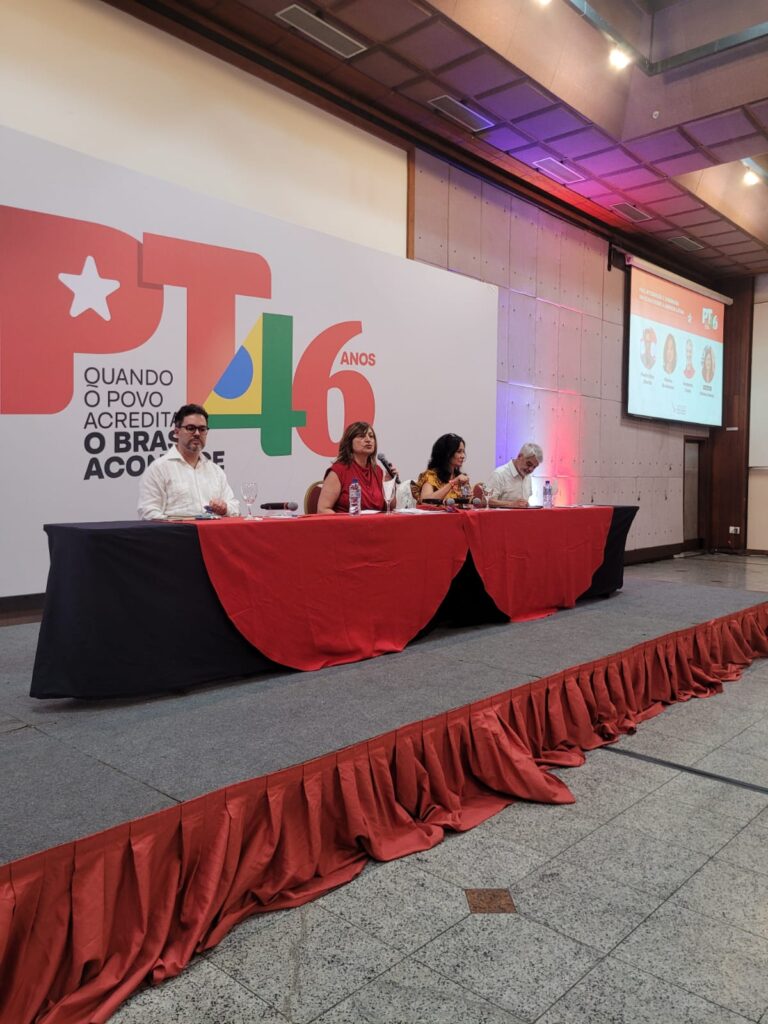
The celebrations of the 46th anniversary of the Workers’ Party took over Salvador (BA) on February 5th. With party members from various regions of the country, this afternoon also brought together specialists and leaders to discuss urgent issues for 2026: peace, sovereignty, and integration were the most important ingredients of the agenda debated at the table coordinated by Mônica Valente, director of the Perseu Abramo Foundation and of the Secretariat of the São Paulo Forum.
Mônica believes that these are “central themes for democracy, sovereignty, culture, and development.” And that the debates scheduled for the coming days were designed “to stimulate public participation, exchange ideas, and promote the collective construction of paths.”
The panel that focused on international issues, the sovereignty of nations, and regional arrangements included the participation of the national secretary of International Relations of the party, Senator Humberto Costa (PT-PE), Pedro Silva Barros, researcher at Ipea since 2009, member of the Board of Trustees of FPA, and full professor of regional integration at the Rio Branco Institute, and Monica Bruckmann, sociologist, director of international relations at UFRJ, and coordinator of the university’s geopolitics study group.
Senator Humberto Costa, in addition to celebrating the 46th anniversary of the PT, also explained the partnership between the SNRI and the FPA that accompanies the accumulated experience “so that we can advance in our international policy and that of the PT, our relationship with progressive parties. To debate the international situation and problematize the important moment we are living now. To create groups to discuss the various regions of the world. This is an effort to update our position and the international policy of our party. The PT is an important reference for the world left, just like the Lula government. The PT is a reference for those who fight for democracy and equality in the world.”
He also made a comprehensive analysis of the world’s situation, the difficulties, and the tensions caused by an extreme right that is organizing globally: “we are children of the democratic struggles in Latin America, we defend international solidarity among peoples. Brazil has always sought solidarity and regional integration among the progressive forces of the world. Our view is that the country’s development cannot be separated from international politics, with open and progressive stances like the ones we have.”
Professor Monica Bruckman addressed the challenges of Brazil and Latin America in the current world context. “It is a great joy to share the panel with the guests,” and she also took the opportunity to comment on Lula’s speech given last week in Panama, when he discussed various aspects from the perspective of defending our region and our region as a region of peace. “President Lula has repositioned an integrationist agenda from an economic perspective and from empowering the region for the negotiations to come.”
Monica also presented data on the region since the pandemic and the loss of leadership of some regions of the world, “We need a thorough analysis not only on world politics but on the materiality of economic life.” The use of war by the United States, changes in production chains and world trade, ports, the debate on rare earths, and the environmental issue were part of the presentation.
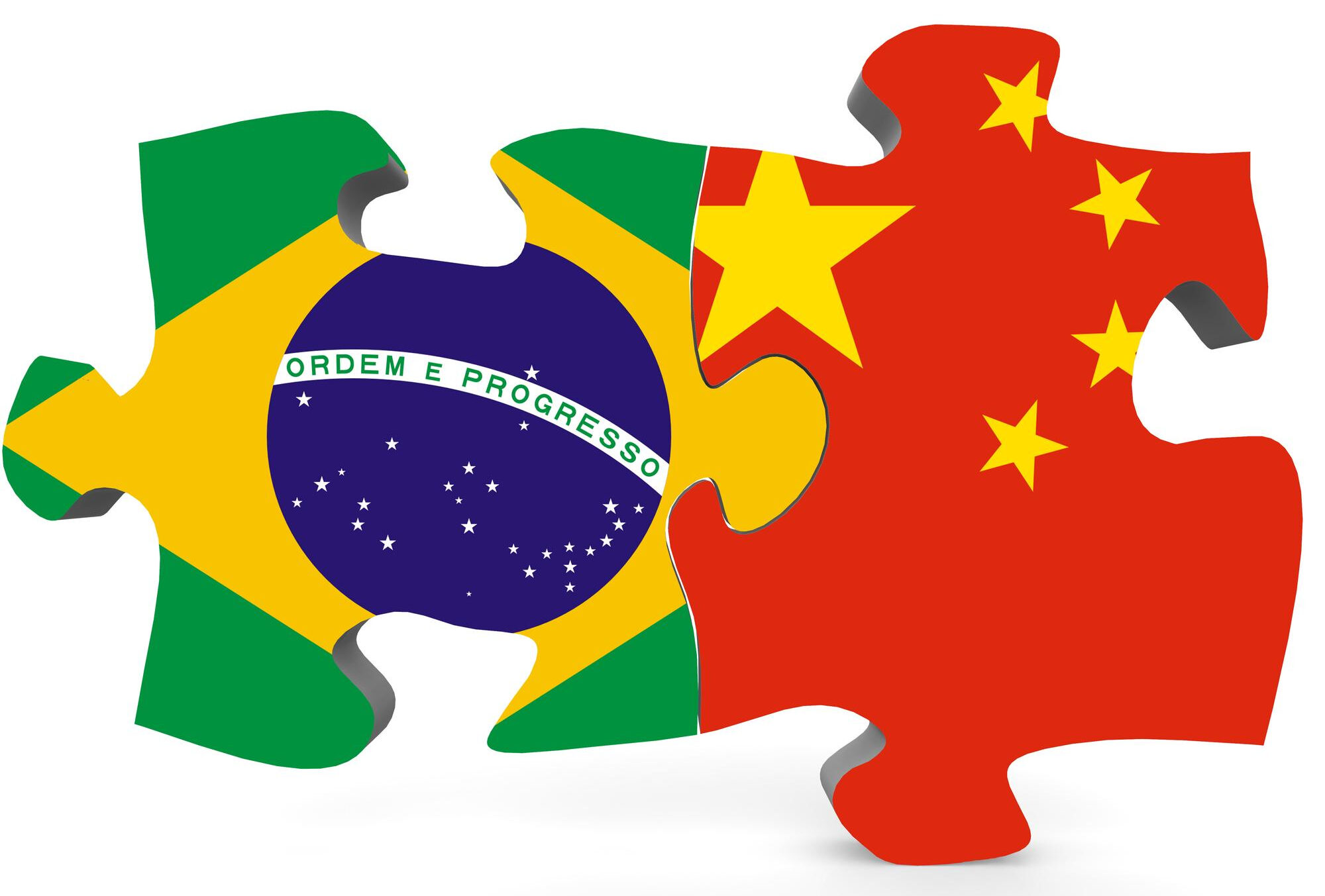
The professor went beyond the topic, “The relationship with the Chinese must be strategic; we cannot make agreements that neglect Brazil’s interests. We need to rethink the relationship with China and Asia in general. The perspective is of national public interest and to create multimodal mechanisms,” she explained.
Pedro Barros went straight to the point: “integration is necessary for the peace and sovereignty of Brazil”. He argued that it is necessary to strengthen Brazil’s role for world stability, solidarity and development, recalling the values of the 1988 Constitution, “which is one of the most advanced in the world. We have to defeat those who attack our sovereignty and call for foreign intervention.” For Pedro Barro, Trump backed down on the tariff issue, but “he will use all his strength to defeat progressive forces. We have seen the attacks on Latin America and Brazil, because it is a message to all the presidents and peoples of the continent. A message from a declining power, which has an introspective policy and for Latin America and the Caribbean, it is very aggressive. It treats us as a backyard and a colony. We need to prepare ourselves to defend our Constitution. Brazil seeks to strengthen the community in the region and defend our countries.”
Barros also showed that Trump’s actions reverberate very aggressively in our region. “And this is reaffirmed with every strategic document from the United States, which does not want sovereign countries. We will need to defend our sovereignty and our capacity for dialogue and unity. Lula is one of the very few who has dialogue with everyone in the world. We do not want Brazil to be isolated in these debates. We will reaffirm the importance of multilateralism. And the right will attack us for these values that we must continue to defend. In a scenario of very divided countries, we need internal cohesion. We have already been very creative, when we created the BRICS, for example. Today the challenge is more complex. But Lula’s leadership will ensure predictability. Decisions need to be made sovereignly by each nation and people, and an agenda must also be built that should be renewed, including through the debates promoted by the FPA on international issues.”
To advance the tax discussion in Brazil, it is necessary that the debate about taxing the super-rich be expanded by other nations, just like the fight against hunger or the use of rare earths.
Below is the full debate that was broadcast live on YouTube by the Perseu Abramo Foundation and the PT: