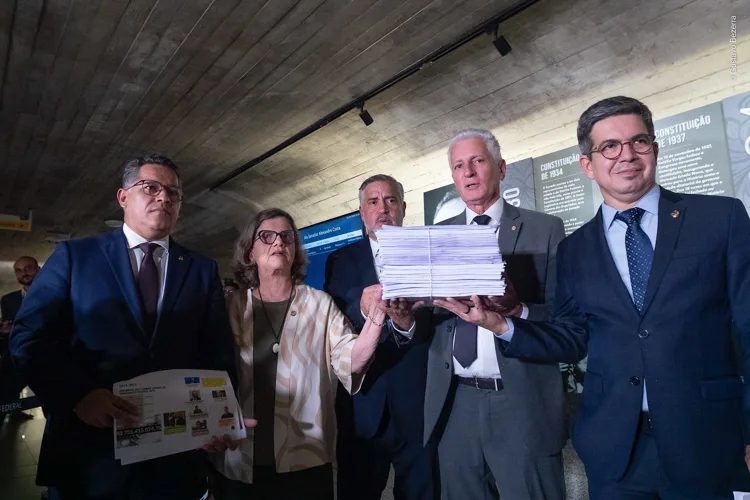
Since the beginning of the year, Finance Minister Fernando Haddad has been giving interviews to major media outlets to highlight the positive economic figures. Two weeks ago, he spoke with journalists from UOL, where he challenged any minister who has held his position to a debate on public finances. “I am willing to talk to any Finance Minister who preceded me; if anyone volunteers, they are invited to participate in the debate,” the minister said in response to journalist Julio Wiziack.
Along the same lines, the minister presented figures that, according to him, support the favorable assessment: the government reduced the primary deficit by 70% in two years; the deficit for the last year, considering exceptions, was 0.48% of GDP; unemployment is at a historically low level, with the government on track to deliver inflation within the target, in addition to the recovery of the purchasing power of the minimum wage. “I have an indicator that I like to observe, which is how many basic food baskets the minimum wage buys. We have significantly recovered the purchasing power of the minimum wage,” he said.
Haddad also claimed credit for confronting high-net-worth interests, citing measures such as the taxation of offshore companies and closed-end funds. “I am the Finance Minister who had the courage to tax the upper class,” the one who managed to “collect condominium fees from those who live in penthouses and weren’t paying.”
Government shutdown
In an interview with the program Acorda, Metrópoles, on Thursday morning, the 29th, Haddad confirmed that he will leave the Finance Ministry next month, after previously informing President Lula of the decision. “He is aware that I will leave the government in February, for sure,” he stated, ending the speculation. The minister also defended his team at the Finance Ministry, praising the work of each secretary and suggesting continuity in the ministry, without confirming names for the succession.
PNAD Survey: Worker income hits record high in 2025
IBGE’s research reinforces the numbers and positive assessment of the Finance Minister. Even with the Selic rate at its highest level in almost 20 years, Brazil ended 2025 with the lowest unemployment rate in the historical series of the Continuous National Household Sample Survey (PNAD Contínua), which began in 2012. Unemployment stood at 5.6% for the year, below the 6.6% recorded in 2024.
The labor market totaled 103 million employed people and 6.2 million seeking employment. The survey also points to a record average monthly income of R$ 3,560.00 in 2025, with a real increase of 5.7% compared to the previous year, in addition to 38.9 million workers with formal employment contracts — the highest number in the series.
IBGE’s interpretation is that household consumption helped offset the restrictive effect of high interest rates. The National Household Sample Survey (PNAD) investigates labor market behavior among people aged 14 and older, taking into account all forms of employment, whether formal or informal, temporary, or self-employed.