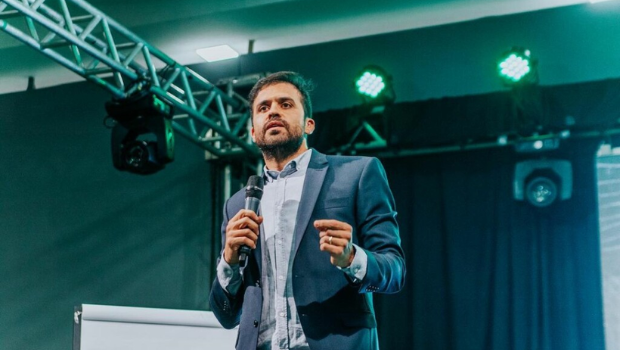
A survey conducted by an analysis center formed by party foundations reveals the aspirations and difficulties faced by workers.

by Claudia Rocha, revista Focus Brasil
The Center for Analysis of Brazilian Society, CASB, held an event to present and discuss the research “The Working Classes” on the afternoon of this Monday (26), in the Carlito Maia auditorium, in a space managed by the MST, located in the Armazém do Campo building in São Paulo.
CASB is a group that brings together the party foundations Perseu Abramo (PT), Lauro Campos and Marielle Franco (PSOL), Maurício Grabois (PCdoB) and the German Rosa Luxemburg Foundation (Die Linke) with the aim of developing research, publications and debates on issues related to the challenges faced by the democratic-popular field.
With the aim of understanding the thinking of the current working class, a two-stage, qualitative and quantitative research study was conducted during 2023 with workers from different categories, in a sample based on the economically active population.
Among the points observed, the main ones indicate a working class that finds itself in a situation of financial insecurity, precarious employment, and with growing concerns about its health and income.

Income is cited as the main concern for 60% of respondents. The lack of social protection in self-employment is also considered a point of concern, with 64% of participants pointing to the fear of getting sick and losing income as a negative aspect. Regarding the benefits established by the CLT (Brazilian labor law), 79% would like to have access to the FGTS (Brazilian severance pay fund) and 69% to unemployment insurance.
Contrary to what is commonly believed, and widely propagated in recent municipal elections, 67% of respondents identified themselves as workers, and only 4% as entrepreneurs. According to the detailed analysis, the term “self-employed worker” is prevalent in the lower income bracket.
In measuring workers’ sympathy towards union organization, 19% have never participated but would like to, 14% say they already participate in workers’ groups on social networks and other types of associations, and 33% are willing to make financial contributions.
From an institutional political standpoint, 55% said they considered themselves invisible to the government, and the same percentage indicated that they would vote for representatives from their professional categories and participate in listening forums for the formulation of public policies.
The debate
The coordinator of the Public Opinion, Research and Studies Center of the Perseu Abramo Foundation, Matheus Toledo, presented the research and detailed the methodology of the work carried out by CASB. The NOPPE coordinator highlighted the discrepancy between the data and common sense regarding the thinking of Brazilian workers about the world of work. Participating as commentators on the research were the president of IBGE, Marcio Pochmann, researcher Cristina Marins, from the Brazilian Center for Analysis and Planning (CEBRAP), and Artur Henrique, consultant for the Peripheries Reconnection project of the Perseu Abramo Foundation and former president of CUT.

According to Marcio Pochmann, there is a conceptual shortcoming in addressing the issue of work today. According to the president of IBGE (Brazilian Institute of Geography and Statistics), the view of recognizing the struggle for rights is still very much linked to work done exclusively outside the home. This excludes not only those who perform activities considered new to the market, in self-employed businesses linked to the internet, for example, but also domestic work itself, in roles involving care for homes and older family members. “There is a new agenda of rights that has not yet been identified,” comments the economist.
In this sense, the CASB research, Pochmann affirms, helps to understand the inadequacy of the terms used and provides elements to explain the change in the “capital x labor” relationship to a form closer to what he calls “debit x credit,” which means that the worker is seeking to maintain stable financing for their living conditions, but now in a much more irregular way. “We are in a transitional phase, so these concepts need to be debated,” he points out.
Cristina Marins praised the survey, considering it thorough and containing relevant information for reflection on the subject. She highlighted some points regarding dialogue with workers at the base of the pyramid, who do not identify with the word “precarious” and who, in work relationships outside the salaried system, feel a greater sense of freedom to escape situations of harassment, especially women.
The researcher states that, as the data showed, female workers are more receptive to the possibilities of collective struggle and more open to union participation than men. Regarding grassroots work with workers, she opines: “It is necessary to focus on rebuilding trust in the political system by recognizing the limitations that exist.”
Artur Henrique spoke about the danger of generalizing about the working class and highlighted the importance of conducting research such as that carried out by CASB. The FPA consultant emphasized the survival instinct of the working class in the world of work and highlighted the so-called “makeshift” work, with the predominance of odd jobs, very common in the periphery.
Furthermore, he emphasized the harmful effects of the Labor Reform spearheaded by former President Michel Temer, which weakened established labor rights and instituted a culture of hiring independent contractors (PJ – pessoa jurídica) in companies, opening the doors to the practice of hiring independent contractors.
Political act
In the same space, in the evening, a public event entitled “Less exploitation, more rights” was held, with the presence of representatives from foundations, labor unions, the federal government, and social movements, such as the Movement of Workers Without Rights.
The director of the Perseu Abramo Foundation, Carlos Árabe, moderated the debate and considered the importance of the topic of work for building a majority in society, especially to combat the rise of the far right.

In the first stage of the discussion, the national president of PSOL, Paula Coradi, commented on the crisis of political representation among the population, and Igor Felippe, representing the MST, provided detailed information about the process of building the Popular Plebiscite that will be held on the agenda regarding the taxation of large fortunes and the reduction of the working day.
In the second part of the event, the National Secretary for Peripheries of the Ministry of Cities, Guilherme Simões, Lígia Toneto, economic policy advisor at the Ministry of Finance, and Adriana Marcolino, technical director of Dieese, participated.
Lígia Toneto defended the proposal to reform the Income Tax and commented on its simplicity for general understanding – exemption for those earning up to 5,000 per month and increased contributions from the super-rich. “Beyond the issue of social justice, the project is important for economic dynamics and helps growth,” she stated.
The importance of the proposal was also highlighted by the technical director of Dieese, Adriana Marcolino, who also presented data regarding labor reforms around the world, which deregulated working hours and altered the negotiation mechanisms from collective to individual.
Secretary Guilherme Simões recalled that the left as a whole spent years, in the pre- and post-coup period, promoting discussions about who “our enemies” were, and that in recent years this issue has become quite clear; therefore, the time is for action.
Regarding the CASB research, Simões emphasized that it represents a proposal that points to optimistic paths for dialogue and that, with his work in the federal government, he believes he is contributing to a reinterpretation of marginalized individuals.