by Pedro Cláudio Cunca Bocayuva
The attempt to construct a scenario of political degradation, based on the mistakes of the political appointees and careerists who narrowed the limits of the Workers’ Party project, has failed. The strategy of criminalizing the Lula government and the Workers’ Party did not manage to erase the small but significant advances in social and cultural priorities achieved during the current four-year period. The use of the media as a weapon, the schemes, and the errors ended up allowing a return of the repressed. The vast popular majorities want to advance further towards achieving social, economic, cultural, and environmental rights and access to public funds and policies, with a view to a redistributive reversal.
The strength of social networks and political resistance to democracy and popular causes has managed to steer the ethical-political debate toward a demand for the substantive construction of social justice. The idea of a Brazil for everyone has begun to gain meaning, without needing the pyrotechnics of marketing strategists or the manipulation of advertising budgets. The sustained process of capillary transformations, with their effects on the priorities of the Brazilian State, has opened the door to progress. A positive interpretation of these partial achievements allows us to envision future advancements.
The paradoxical effect of a continuity in the terms of the perverse contract of neoliberal adjustment combined with inflation control was accompanied by an alternative logic of distributive pressure. The right wing was left without a banner and can no longer use the State, the budget, and public funds in a purely concentrating perspective. Its horizon of destabilizing politics and the mobilization of society through the feeding of a sectarian and manipulative moralism led to the second round. But it ended up forcing a reflection on the concrete content of policies. The rescue of memory through the pedagogical action of comparison with the FHC years has been blocking a solution of the “backroom deal” and “impeachment” type, despite the efforts and Lacerdist threats that still contaminate the air of the Republic.
The partial defeat of the PFL oligarchies, the division of the PMDB center, and the exposure of the authoritarian face of the PSDB elites in São Paulo, even with all the support from the “global electronic prince” and legal trickery, have revealed the historical gap of the dependent capitalist bloc. They did not have and do not have a project for Brazil; they are historically responsible for the plunder and the structure of corruption; they are the ones who reject the collective body of the people. The face of Brazil is different. Our colors are different. They tried to racialize and disqualify us based on the government’s mistakes, but they are not succeeding in continuing to manipulate and perpetrate coups.
Democracy advances as a demand for broader and deeper social transformations. The renewed attempt to maintain a policy of permanent counter-revolution finds no echo or legitimacy in a society that knows how to identify the roots of violence. The name of the crime is social genocide; the culprit is class, gender, ethnic-racial, and generational inequality.
The process of cultural transformation that has begun to take root in the collective sense as a value of common freedom and common equality as a condition for building a new civility, paves the way for the outlines of a true Republic. The people do not seem to watch helplessly as the facts and manipulations are hammered away. The simulacrum of politics allows the process of refounding the PT (Workers’ Party) to articulate itself with this desire to advance as a condition for overcoming political morbidity, the crisis in Congress, and the crisis of the media manipulation apparatus. This highlights the pseudo-neutrality of commentators and the knowledge of the elites. The process of constructing a different opinion is sustained by a new collective intelligence that relies on more income, more access, and other forms of criticism and argumentation. It is as if the network of the new Brazilian democracy is already taking shape in the different anthropological spheres of constructing a draft program for the nation.
Ironically, the failure of the elites has only intensified with the failure of their rhetoric and methods. Without a program or a project other than their self-reproduction in power, the forces of the “Platypus,” both inside and outside the PT (Workers’ Party), are fading away. Well done, PT Refoundation. It’s almost over. The next blows will come from the most opaque and least constructive power in terms of freedom and quality of information, such as the complexes like Globo and Veja. We are certain that Brizola would be pleased to see the “Bearded Toad” win in the polls commissioned by them and despite them. Although the 20% difference doesn’t deserve a headline for these “professional and unbiased” (sic) media outlets.
The fact is that the process has reversed. The spell has backfired. We are beginning to learn that in the modernity of communication, horizontal networks offer a different process of political interpretation. Like a true public sphere, where a debate takes place among free women and men. We are building the debate and critical assessment of the electoral process based on an interpretation where the virtual is anchored in the real. Where the right to access qualified information becomes a transformative power, a capacity for judgment, and an act of resistance. We are a society emancipating itself from the fetishization of culture and the spectacle of passive consumption in politics. Now, the meaning of politics has gained expression in the form of active participation in building the right to have the right to make our own choices.
This election is awakening a greater passion, stemming from greater suffering, from a harsh critique of the risks that the PT’s leadership group has placed us in. But a new PT ideology is gaining strength, and its future will depend on its ability to connect with the forces unleashed by the initial effects of partial changes. We can do much more. Dare to fight and dare to win.
This is a manifesto pamphlet for the power of electronic networks, social movements, and political activists who know what is at stake in the risk of regression. On the path charted by Alckmin, we can only end up in a permanent state of police exception, reproducing a country of enclaves and islands of wealth in the hands of a few, surrounded by enormous social, racial, and territorial apartheid, deliriously subjected to servile globalism within the Empire.
*Pedro Cláudio Cunca Bocayuva he holds a PhD in Urban and Regional Planning (IPPUR-UFRJ) and is a member of the Eder Sader group of the PT-RJ (Workers’ Party of Rio de Janeiro).

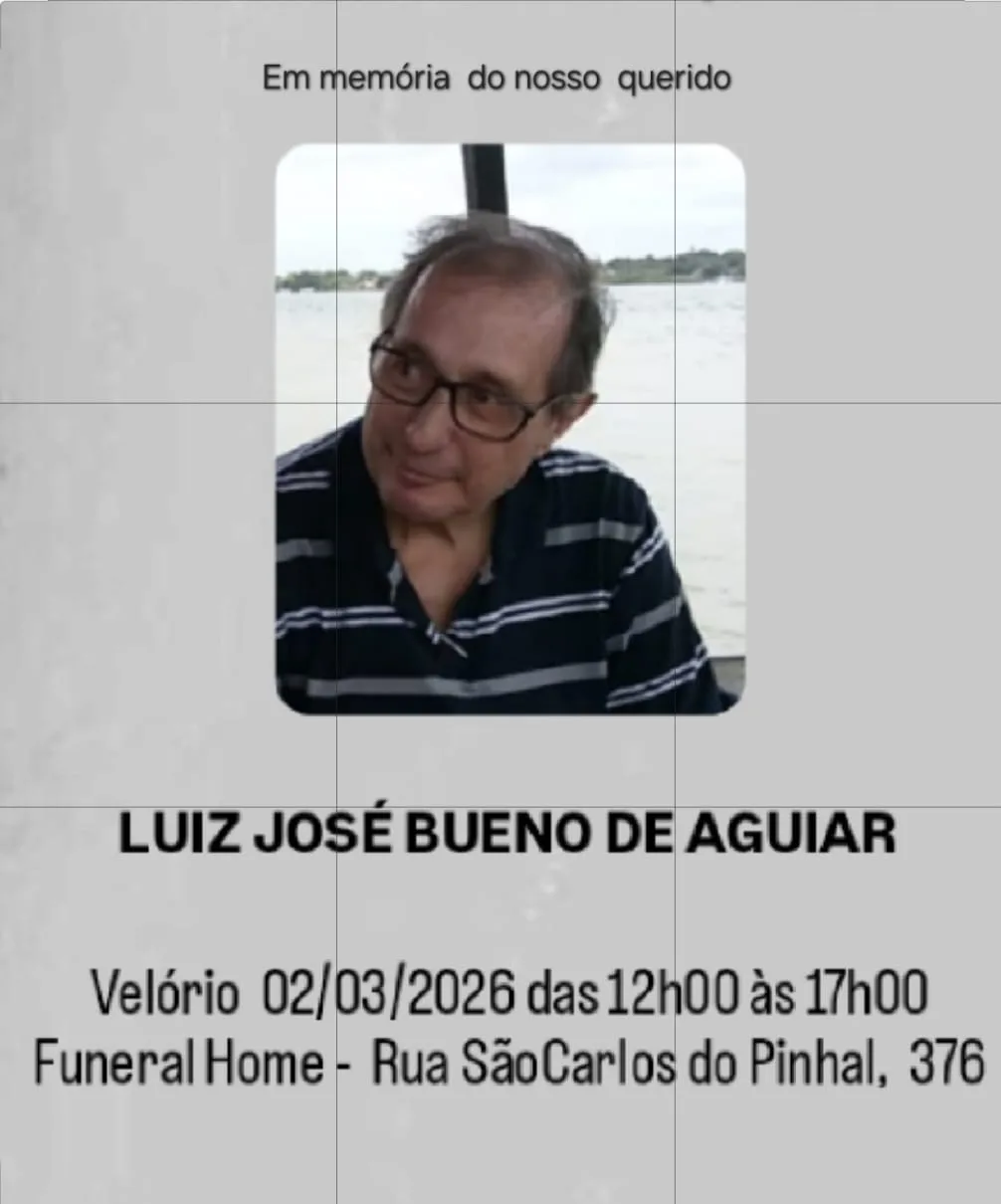
FPA mourns the passing of lawyer Luiz José Bueno de Aguiar
Luiz José Bueno de Aguiar, also called Lulinha, was a lawyer for the Perseu Abramo...